Build process-control models yourself, then keep them running in production
Amfibian lets process engineers build and validate models and control logic, deploy them to production, and keep operating them in one platform.
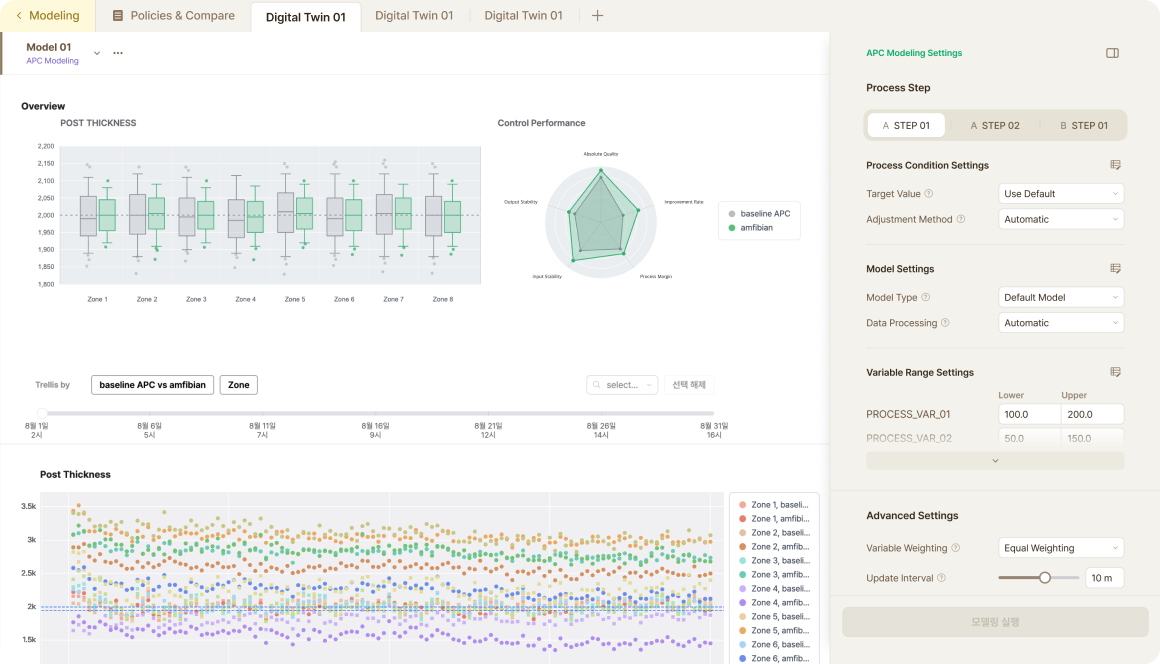
In one platform, go from development and validation to production operation
Amfibian consists of Lab, Studio and Runtime. Each has a distinct role, while models and operating information stay connected.
Lab
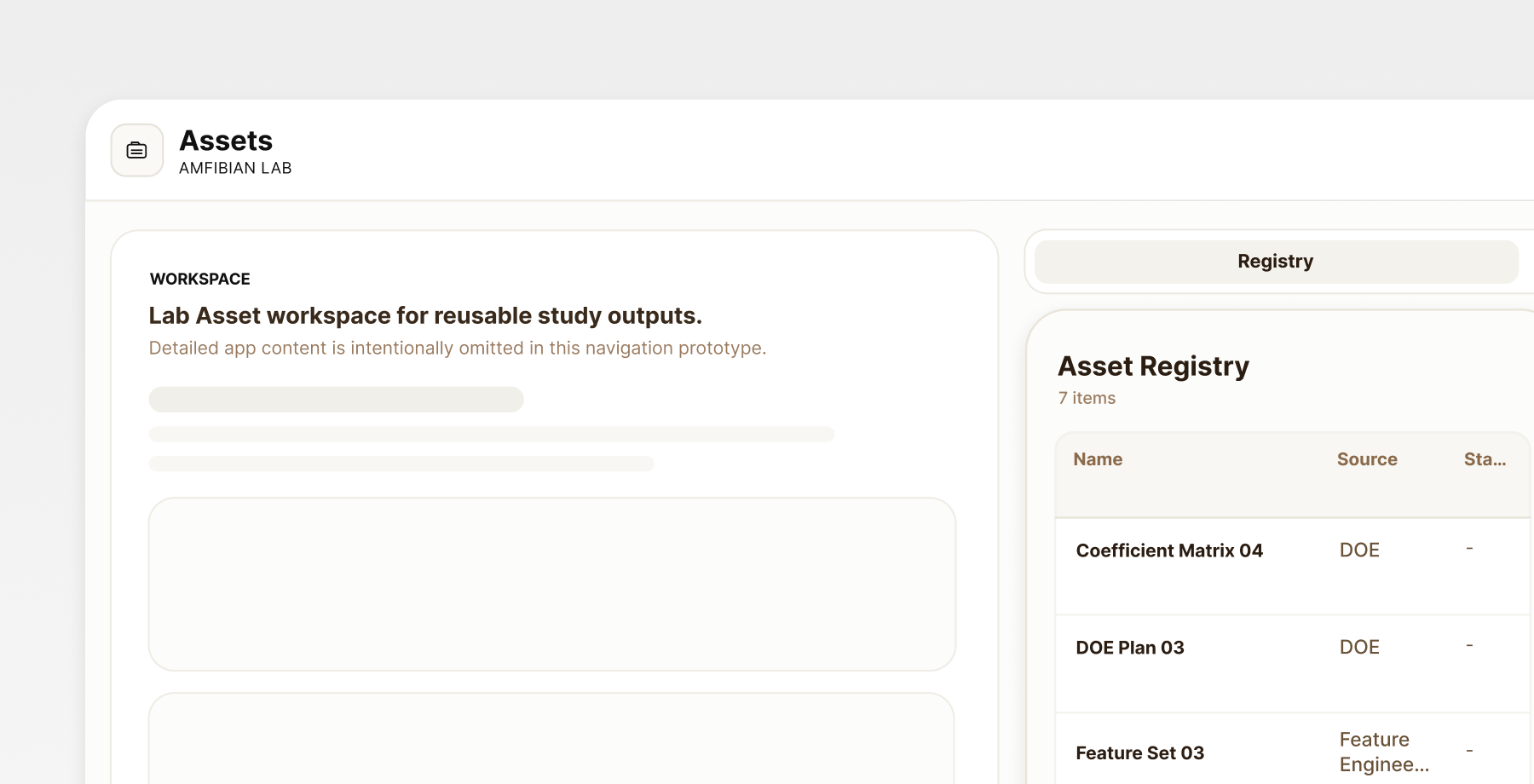
Explore process data and design experiments to build the basis for modeling.
Studio
Build models and control logic from process context and data, then validate outcomes and constraints in a Digital Twin.
Runtime
Connect validated models to production data and keep them running in production.
Choose the Apps you need within the Amfibian Platform
DOE, Virtual Metrology and Process Control are Apps for different engineering tasks within Amfibian.
DOE
Define variables and ranges, then learn useful process relationships with fewer experiments.
Explore DOE →Move from development to production through one workflow
Build and validate in Studio, deploy to production, and keep operating in Runtime. Operating results feed the next model and deployment.
Build
Configure models and control logic for the process context and available data.
Validate
Check expected outcomes and constraints in a Digital Twin before deployment.
Deploy
Connect validated models to the production environment and data flow.
Operate
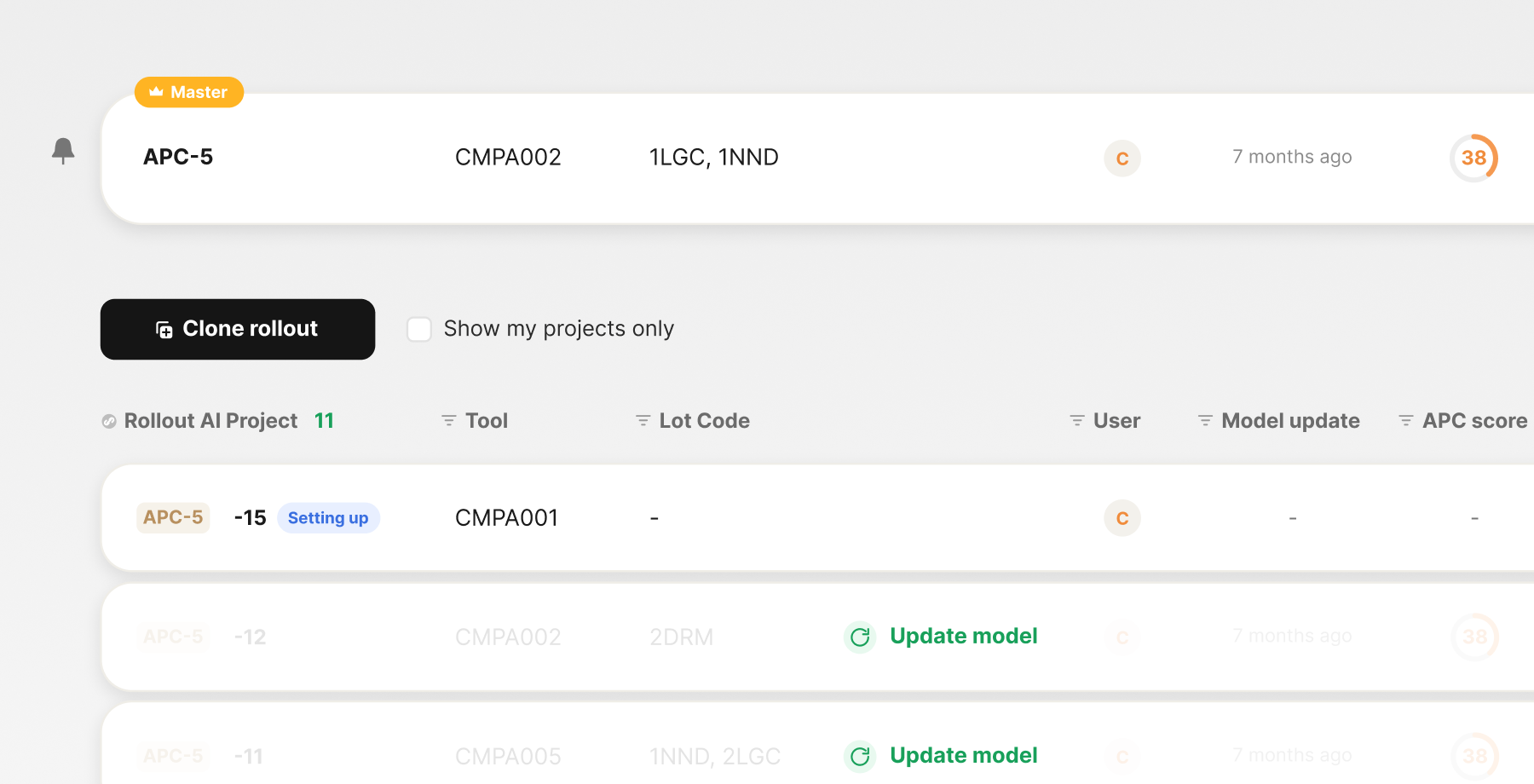
Monitor state and applied results while improving models and operating criteria.
What can you do with Amfibian?
Estimate outcomes, calculate the next production conditions, and connect those decisions to production operation.
Estimate process results for products that were not measured
Estimate quality values for unmeasured wafers or substrates from process and equipment data, then use them for state assessment and control.
Calculate production conditions for
the next run
Calculate recipe variables for the next wafer, lot or batch from the previous result and target, then revalidate when conditions change.
Control within-wafer profile and uniformity
For multi-zone equipment, model spatial results and zone conditions to calculate zone conditions that reach the target profile and uniformity.
Connect process improvement to business value
Reduce process variability and repetitive engineering work, expand engineer coverage, and reduce dependence on individual experts.
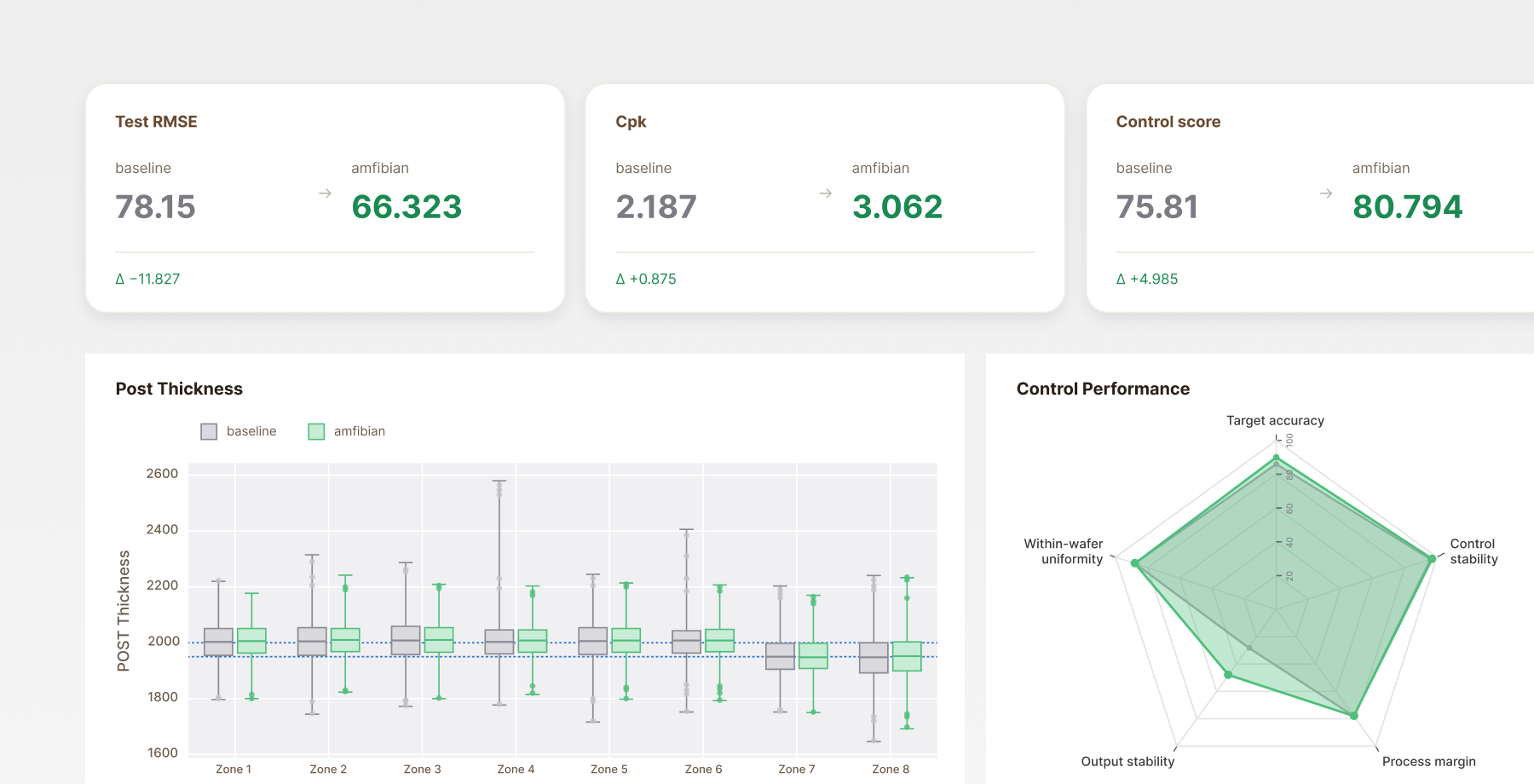
Build a stronger basis for yield improvement
Reduce process and upstream variation to lower spec-out risk and secure more process margin.
Manage more products and tools per engineer
Reduce repeated model setup, tuning and state checks so each engineer can cover more.
Reduce dependence on individual experts
Keep modeling methods, validation criteria and operating policies in the system.
Key questions about Amfibian
What is the difference between Studio and Runtime?
Studio builds and validates models and control logic. Runtime connects validated results to production data and operates them in production.
What are Apps?
Apps such as DOE, Virtual Metrology and Process Control are capabilities organized around the problems process engineers need to solve.
Do we need to replace our existing MES, FDC or APC?
No. Keep existing manufacturing systems and add the model development, validation and operation capabilities you need.
What problem are you seeing in your process?
Amously will look at it with you.
You do not need to decide on a purchase from the start. Share the problem and available data with us, and we will work through the options together.